
Prefacio
PCFD: speaking the same language
I still recall my first trip to study Orthopaedics in Spain. As a medical student, I traveled to Salamanca in 2001 to spend 4 weeks with Dr. Antonio de Pedro and his team. I was fascinated by the Spanish hospital system, having already been enamored with Spain’s culture and history. During that time I purchased a book written by Professor Luis Munuera, which I painstakingly read from start to finish (Figure 1). I remember finding the foot and ankle section both brief and challenging, with no idea at the time that I would ultimately dedicate my career to foot and ankle orthopaedics. I had the opportunity to return to Spain in 2007 to visit Dr. Luis Álvarez-Galovich through connections at the Hospital for Special Surgery, spending time at Fundación Jiménez Díaz. Over the years since those early experiences, foot and ankle surgery has progressed tremendously, as has our understanding of the wide spectrum of conditions encompassed by flatfoot deformity.
Much of my career and research has focused on the collapsing foot, inspired by Dr. Jonathan Deland at the Hospital for Special Surgery, who set the bar for the field and consistently asked the most important questions. In 2019, César de César Netto and I organized the first meeting of the consensus group on flatfoot and proposed a new terminology and classification system. Although there was some initial pushback across multiple countries, including Spain, we ultimately concluded that the proposed nomenclature could be readily translated into Spanish (and other languages). In essence, we realized that we were all speaking the same language.
In my opinion, the field of foot and ankle surgery has made remarkable advances in our understanding of progressive collapsing foot deformity (PCFD). We have significantly improved our understanding of bone alignment and joint subluxation patterns, aided in large part by the widespread adoption of weightbearing computed tomography. Additionally, magnetic resonance imaging has enhanced our understanding of the progressive patterns of ligament failure. We are now just beginning to decipher the natural history of this complex condition.
I am particularly proud that Jesús Vila y Rico has invited me to participate in this monograph of the Sociedad Española de Medicina y Cirugía de Pie y Tobillo (SEMCPT) Foot and Ankle Journal dedicated to PCFD. The editorial team has assembled an outstanding group of authors, including several established leaders in the field as well as emerging contributors who are advancing our understanding of this pathology. PCFD epitomizes the biomechanics of the foot and provides a framework for understanding other foot and ankle conditions, including hallux valgus, midfoot collapse, ankle instability and arthritis. It is essential that we master these principles and recognize when early conservative treatment may prevent future collapse. This issue explores these concepts along with the imaging advances that have driven our understanding of flatfoot, along with state-of-the-art reconstruction and arthrodesis techniques.
I hope that this issue, and our continued collaboration, will stimulate further investigation into improved methods of ligament reconstruction in PCFD, including the spring, deltoid, interosseous, cervical, and related ligament complexes. Ultimately, we must develop the ability to predict –based on preoperative deformity, advanced imaging, and large outcome datasets– the type and extent of procedures required for each individual foot to achieve the best possible outcomes for our patients. The thoughtful application of minimally invasive techniques and continued refinement of total ankle strategies will likely take us to the next level in patient care.
For me, PCFD represents the most exciting area of foot and ankle surgery. I look forward to the discoveries that lie ahead in the second half of my career and will prioritize continued collaboration between American Orthopaedic Foot and Ankle Society (AOFAS) and SEMCPT, particularly as SEMCPT serves as the guest nation at our Annual Meeting in San Antonio, October 13-16, 2027.
Dr. Scott Ellis
Hospital for Special Surgery (HSS)
Nueva York. EE. UU.
DCPP: hablamos el mismo lenguaje
Aún recuerdo mi primer viaje para estudiar Cirugía Ortopédica en España. Como estudiante de Medicina, viajé a Salamanca en 2001 para pasar 4 semanas con el Dr. Antonio de Pedro y su equipo. Me fascinó el sistema hospitalario español, ya que previamente me había enamorado de la cultura y la historia de España. Durante esa estancia adquirí un libro escrito por el profesor Luis Munuera, que leí minuciosamente de principio a fin (Figura 1). Recuerdo que el capítulo dedicado al pie y tobillo me pareció breve y complejo, sin imaginar en aquel momento que acabaría dedicando mi carrera profesional a la cirugía ortopédica del pie y tobillo. Tuve la oportunidad de regresar a España en 2007 para visitar al Dr. Luis Álvarez-Galovich a través de contactos en el Hospital for Special Surgery y pasé un tiempo en la Fundación Jiménez Díaz. Desde aquellas primeras experiencias, la cirugía de pie y tobillo ha avanzado de forma extraordinaria, al igual que nuestra comprensión del amplio espectro de patologías englobadas dentro de la deformidad del pie plano.
mact.1801.fs2603001-figura1.png
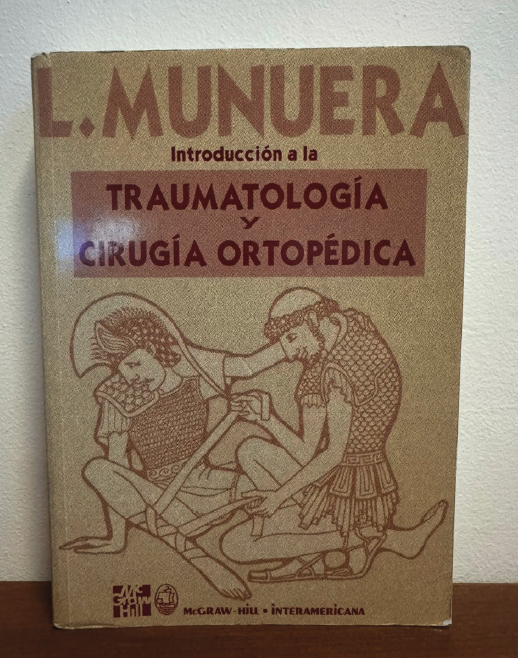
Figura 1. Introducción a la Traumatología y Cirugía Ortopédica, por L. Munuera. Libro del Dr. Scott Ellis.
Gran parte de mi carrera y de mi actividad investigadora se ha centrado en el pie plano, inspirado por el Dr. Jonathan Deland en el Hospital for Special Surgery, quien marcó el estándar en este campo y supo plantear de forma constante las preguntas más relevantes. En 2019, César de César Netto y yo organizamos la primera reunión del grupo de consenso sobre el pie plano y propusimos una nueva terminología y un sistema de clasificación. Aunque inicialmente hubo cierta resistencia en varios países, incluido España, finalmente llegamos a la conclusión de que la nomenclatura propuesta podía traducirse fácilmente al español (y a otros idiomas). En esencia, comprendimos que todos estábamos hablando el mismo lenguaje.
En mi opinión, el campo de la cirugía de pie y tobillo ha logrado avances notables en la comprensión de la deformidad colapsante progresiva del pie (DCPP). Hemos mejorado de manera significativa nuestro conocimiento sobre los patrones de alineación ósea y subluxación articular, en gran parte gracias a la adopción generalizada de la tomografía computarizada en carga. Asimismo, la resonancia magnética ha permitido comprender mejor los patrones progresivos de fallo ligamentoso. Actualmente, estamos comenzando a descifrar la historia natural de esta compleja patología.
Me siento especialmente orgulloso de que Jesús Vila y Rico me haya invitado a participar en esta monografía de la Revista de Pie y Tobillo de la Sociedad Española de Medicina y Cirugía de Pie y Tobillo (SEMCPT) dedicada a la DCPP. El equipo editorial ha reunido a un grupo excepcional de autores, que incluye tanto a referentes consolidados en el campo como a investigadores emergentes que están ampliando nuestro conocimiento de esta patología. La DCPP representa de manera paradigmática la biomecánica del pie y proporciona un marco conceptual para comprender otras patologías del pie y tobillo, como el hallux valgus, el colapso del mediopié y la inestabilidad y artrosis del tobillo. Es fundamental dominar estos principios y reconocer cuándo un tratamiento conservador precoz puede prevenir un colapso posterior. Este número explora estos conceptos junto con los avances en imagen que han impulsado nuestra comprensión del pie plano, así como técnicas de reconstrucción y artrodesis de vanguardia.
Espero que este número, junto con nuestra colaboración continuada, estimule nuevas investigaciones orientadas a mejorar los métodos de reconstrucción ligamentosa en la DCPP, incluyendo los complejos ligamentosos spring, deltoideo, interóseo, cervical y otros relacionados. En última instancia, debemos ser capaces de predecir –basándonos en la deformidad preoperatoria, la imagen avanzada y grandes bases de datos de resultados– el tipo y la magnitud de los procedimientos necesarios para cada pie individual, con el fin de alcanzar los mejores resultados posibles para nuestros pacientes. La aplicación reflexiva de técnicas mínimamente invasivas y el perfeccionamiento continuo de las estrategias en artroplastia total de tobillo probablemente nos permitirán dar un nuevo salto en la atención al paciente.
Para mí, la DCPP representa el área más apasionante de la cirugía de pie y tobillo. Espero con ilusión los descubrimientos que están por venir en la segunda mitad de mi carrera y daré prioridad a la colaboración futura entre la American Orthopaedic Foot and Ankle Society (AOFAS) y la SEMCPT, especialmente teniendo en cuenta que la SEMCPT será la nación invitada en nuestra Reunión Anual en San Antonio, del 13 al 16 de octubre de 2027.
Dr. Scott Ellis
Hospital for Special Surgery (HSS)
Nueva York. EE. UU.
Figuras
Figura 1. Introducción a la Traumatología y Cirugía Ortopédica, por L. Munuera. Libro del Dr. Scott Ellis.
Información del artículo
Cita bibliográfica
Descargar artículo:
 mact.1801.fs2603001-prefacio.pdf
Licencia:
Este contenido es de acceso abierto (Open-Access) y se ha distribuido bajo los términos de la licencia Creative Commons CC BY-NC-ND (Reconocimiento-NoComercial-SinObraDerivada 4.0 Internacional) que permite usar, distribuir y reproducir en cualquier medio siempre que se citen a los autores y no se utilice para fines comerciales ni para hacer obras derivadas.
Comparte este contenido
En esta edición
- Prefacio
- Introducción y clasificación
- Etiología y Patomecánica
- Exploración física con enfoque práctico
- Diagnóstico e imágenes con enfoque práctico
- Tratamiento conservador
- Tratamiento quirúrgico desde el punto de vista de la preservación articular
- Papel de las partes blandas en el tratamiento quirúrgico
- Artrodesis en el tratamiento de la deformidad colapsante progresiva del pie
- Tratamiento en estadio avanzado con afectación del tobillo
- Relación entre el <em>hallux valgus</em> y la deformidad colapsante progresiva del pie
- Conclusiones. Tratamiento a la carta del pie plano (deformidad colapsante progresiva del pie)
Más en PUBMED
Más en Google Scholar


La Monografía de Actualización de la SEMCPT está distribuida bajo una licencia de Creative Commons Reconocimiento-NoComercial-SinObraDerivada 4.0 Internacional.